How to Rock 2025 with Your Money
Forget setting New Year’s resolutions that fizzle out by February. When it comes to your money, you need strategies that last and work in real life, not just on paper.
Here is the truth—nearly a quarter of resolutions don’t survive the first week, and only about a third make it past the first month. Add that to the fact nearly half of us admit to crying over our money woes, and it’s clear we need better tools for success. (Yes, even people earning $250,000+ cry about their finances. Who knew?)
Let’s make 2025 the year we stop crying and start winning with our money. Here is how to build a better financial plan in three simple, action-packed steps.

Step 1—Dig Out of Debt
Debt isn’t just a financial drain, it is a mental burden. But here is the deal—paying it down isn’t just about throwing more money at it. You need to get to the root of the problem.
Start with a budget.
The word “budget” gets a bad rap, but think of it as a tool to afford everything you love. Here is why people hate it: they begin by thinking of the fences around their budget and what they can’t do. Turn this around and start by funding your priorities (travel, hobbies, fun). Then, work your bills around those important goals. You will find a budget helps you achieve more of what you love, and maybe more importantly, it helps you automatically eliminate any spending that isn’t moving the needle.
Pro Tip—Use apps like Monarch Money, YNAB, or TillerMoney to track spending. Prefer the envelope method? Try Qube Money for a modern twist.
Hold weekly money meetings.
My wife Cheryl and I used to argue about money constantly until we started short, weekly check-ins. These quick meetings reduced stress, improved communication, and kept us on track. Some of my money nerd friends LOVE longer meetings (think Camp David Summit), but I’ve found that the non-money nerd would rather do anything but attend that all-day session. Your first goal should be to make this fun for everyone.
Pro Tip—Keep it simple. Review last week’s spending, plan for upcoming expenses, and give each other no-strings allowances. Make it fun! Cheryl and I often have our meetings over pancakes or wine, depending on the time of day, and that makes us look forward to our money dates.
Build an emergency fund.
Save $1,000 fast in a separate account for life’s curveballs. We need to break the habit of immediately turning to a credit card when life’s moments hit, like when your car breaks down, or your kid surprises you with an “urgent” science project that is due tomorrow. After you have built some savings, slowly build this toward at least three months’ expenses. You will need this if you lose a job or find that European travel deal you have been eyeing, and it goes on a once-in-a-lifetime sale.
Pro Tip—Struggle with dipping into savings too often? So did I, and here is how I fixed it. I opened an account at a different bank across town and cut up the debit card. That small hurdle was enough for my brain to find more creative ways to solve a problem instead of attacking my stack of Benjamins.
Pay small debts first.
Start eliminating the smallest debts to build momentum. Seeing progress quickly boosts confidence and keeps you motivated to tackle bigger challenges.
Pro Tip—Even if your only debt is a low-interest mortgage, consider paying it off early. Financial planner, Wes Moss, found in his book What The Happiest Retirees Know, the happiest retirees are debt-free. Save for retirement first, then tackle your mortgage, even if the interest rate is low.

Step 2—Invest Like a Pro
Investing doesn’t have to be complicated. The key is to focus on diversification and consistent contributions, not chasing the next hot trend.
Keep it simple.
Everyone worries about what investments to use. I bring good news. The important part of investing is actually shoveling more money into your investments when you are first starting out. If you are new to this, stick with broad options like an S&P 500 or Total Stock Market fund. These give you exposure to companies like Microsoft, Coca-Cola, and Nike without the risk of betting on individual stocks.
Pro Tip—Avoid individual stocks and real estate early on. Stocks lack diversification, and real estate is too illiquid when emergencies strike. You can’t sell a bathroom quickly enough to purchase new school clothes for the kids.
Automate everything.
I’ve spoken with the best and brightest in the financial world on our Stacking Benjamins podcast. David Bach (ten-time New York Times Bestselling author), Jill Schlesinger (CBS News), Jean Chatzky (Today Show Money Editor), and Suze Orman all shared one tip—Don’t trust yourself to be disciplined. The best way to stay consistent is to automate your savings. Use payroll deductions for workplace retirement accounts or set up automatic transfers to a Roth IRA.
Pro Tip—Start with your workplace plan to take advantage of payroll deduction (401k, 403b, etc.), then add a Roth IRA for tax-free growth. Make it automatic so you don’t rely on willpower.
Diversify over time.
When should you worry about diversifying more analytically? Once you have saved $100,000, start fine-tuning your portfolio based on your goals. Use tools like the efficient frontier to maximize returns while managing risk.

Step 3—Save More Faster
Now that you are paying down debt and investing, it’s time to find extra cash. Use these tips to save without sacrificing joy.
Cut subscriptions.
Do you really need five streaming services? Rotate them. Watch Netflix for three months, then cancel and binge another. That seems like a small tip…maybe saving you $50 per month. But $50 per month is $600 per year. That is $6,000 per decade, which could add up to some really nice family vacations. Want to do more? Little moves like this add up.
Spend on what matters.
Review your bank statements. Identify what truly lights you up, and cut the rest. Cheryl and I realized we preferred cooking at home over dining out, so we now spend more on kitchen gadgets (hello, hot chocolate maker!) and less on restaurants.
Pro Tip—When I spoke with motivational speaker Jon Acuff about this topic, he suggested building three columns to see what type of person you are. List experiences that make you happy (traveling, time with family, etc.). Then, in column two, list “things” that create joy (a vase, artwork, board games). In a third column, include people who you like to be around and spend time with. You will quickly find one list is longer than the other. Identifying ways to do more on that list is how to add more fun to your life and the best way to build your budget.
Ask for a raise.
Statistically, most bosses want to give you a raise—you just need to ask. Frame it as a win-win by showing how your work benefits the company.
Pro Tip—Remember, your boss is often your ally, not the final decision-maker. Approach them confidently and collaboratively.
What Success Looks Like

When you tackle debt, invest wisely, and save more, you are not just building wealth—you are creating a life that reflects your priorities.
The best part? No more tears over money. Instead, you will have a system that works, leaving you free to focus on what really matters. The joy of stacking Benjamins is not more money—it’s that money allows me time and energy to spend it how I want, working on projects I love.
2025 is your year to stop stressing and start stacking. Now, go make it happen!

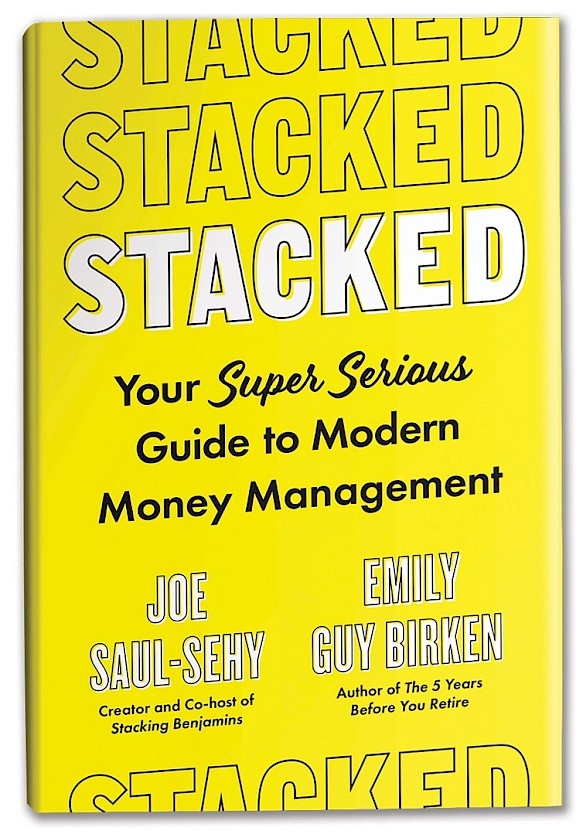
Joe Saul-Sehy is the creator and co-host of the Stacking Benjamins podcast and co-author of STACKED: Your Super-Serious Guide To Modern Money Management. He is a board member at large of The Plutus Foundation and is the former board president and board member of Partnership for the Pathway.
Joe was the “Money Man” at Detroit television WXYZ-TV for nine years, appearing twice weekly. His advice has appeared in Bride, Best Life, and Child magazines. Los Angeles Times, Chicago Sun-Times, Texarkana Gazette, Detroit News, and Baltimore Sun newspapers. He’s also appeared online in more than 200 different places, including CNBC.com and WSJ.com.
Stacking Benjamins was called the “Best Personal Finance Podcast” by Kiplinger. Lifehacker listed the show as one of the top 10 of 2021. Joe and the SB team have won five Plutus Awards and the Academy of Podcasters “Best Business Podcast” award (beating well-known shows like The Tim Ferriss Show, How I Built This, and Gimlet’s StartUp).
Stacking Benjamins is created in Joe’s mom’s basement in Texarkana, Texas, where Joe lives with his spouse Cheryl and their cat Cooper.