Living Light
Jay Shinn was born in the small town of Magnolia, Arkansas, and grew up in a large family. As a young boy, he often accompanied his father to his job, where his dad oversaw the construction sites of new motels. Watching his father work inspired his childhood plans for the future. “For most of my childhood, I thought I would become an architect, because I didn’t see a clear path to being an artist. But I always came back to drawing and painting,” he recalls.
At seven, Shinn enrolled in Marjorie’s House of Artists, a staple of Magnolia. There, he became familiar with various mediums of art, including painting, drawing, and sculpture. “Marjorie would enter us in art shows around the area in places like El Dorado, Texarkana, and Shreveport. I found the Spring Lake Park art exhibitions to be inspiring because you could win a prize and meet other artists.” While Shinn got along well with many kids, he didn’t always beat to the same drum. “Unlike my schoolmates, one of my favorite things to do was to be dropped off in Texarkana at Stanhope’s Art Supplies, where I would spend hours perusing the aisles and dreaming up my next creation.”
Magnolia, being the home of Southern Arkansas University, has a unique fine arts prevalence, so by ninth grade, Shinn was auditing art classes. He eventually attended a five-week art camp at the University of Kansas, where he got the itch to spread his wings. The true turning point came during the summer of his sophomore year in college, when he applied for the artist residency at the Skowhegan School of Painting and Sculpture. Founded in 1947, the program in Skowhegan, Maine, selects 65 emerging artists each year for an intensive nine-week summer session. “The Skowhegan program had ties to major museums and gave me a broader vision of what my future could be. For the first time, I could see a career path as a working artist rather than an art educator.”
When you experience Shinn’s art, his childhood influences are obvious. “Having grown up around my father’s creative process for planning and building motels, I watched him draw on paper and was able to imagine his projects coming to life. To this day, most of my pieces begin in the exact same way.” Another nod to his past is the way he incorporates a wide range of mediums. “I’ve always been open to trying new materials and using whatever I have available to me.”
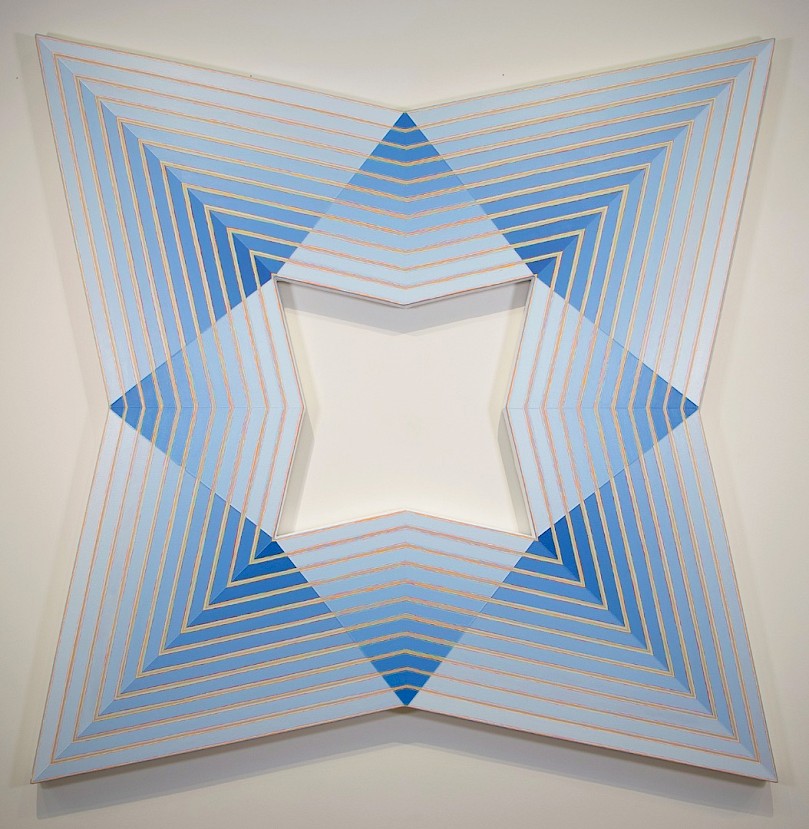
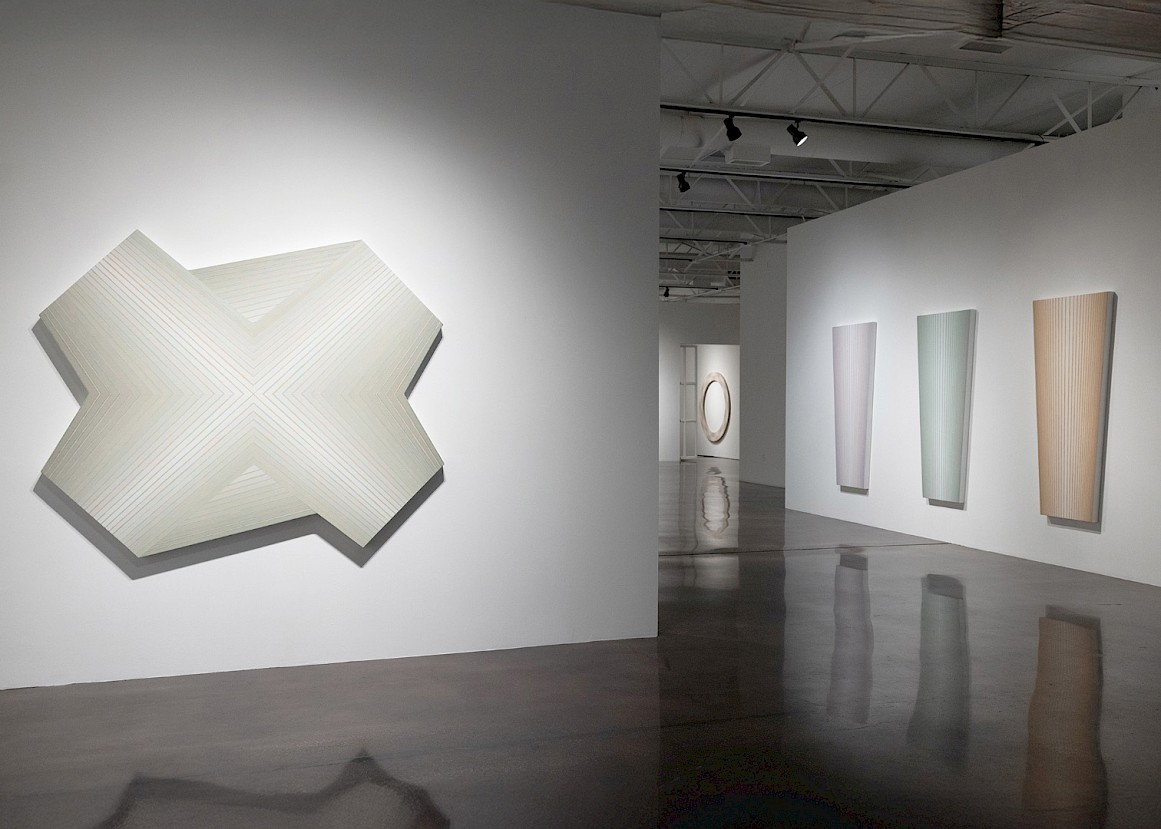
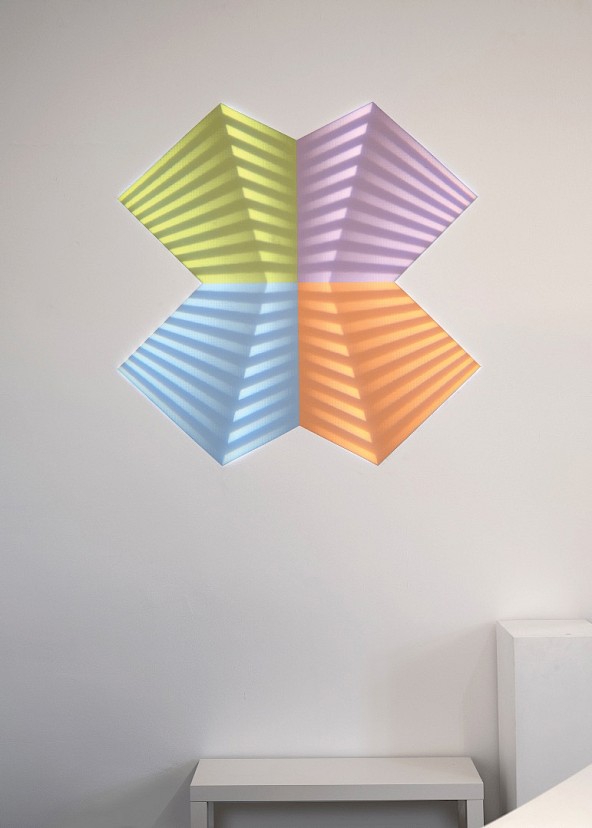
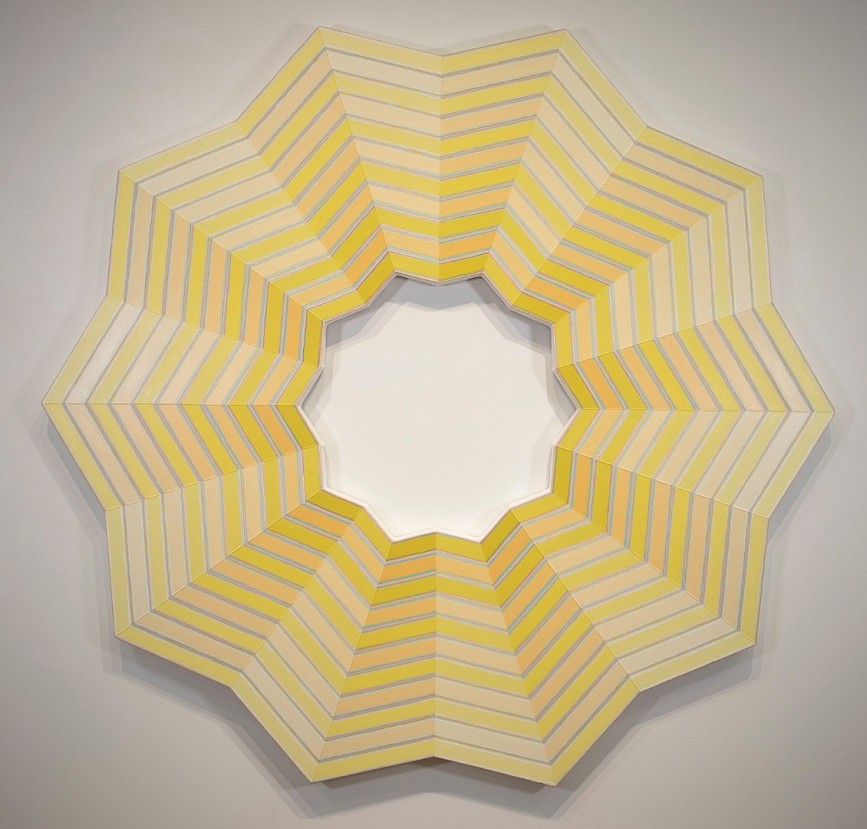
Shinn is recognized for his distinctive use of light and geometric forms. His installations often blend painting, sculpture, and architecture, creating optical illusions that transform two-dimensional spaces into dynamic, three-dimensional experiences. By layering neon, projection, and reflective materials with precise geometric patterns, his work invites viewers to question depth, movement, and perception itself.
Shinn describes the evolution of his art as unfolding in phases. “While working with the same aesthetic concerns, I am always working through phases. The phases begin more minimally and emerge more complex.” His work remains rooted in geometric forms and typically begins with preparatory drawings. “I do a lot of drawings that eventually turn into canvases, neon work, and light-based projections. I can be a little restless as an artist, but I enjoy following the direction of where the art wants to go. It’s a dialogue that leads from one thing to the other.” The optical illusion layers that run through his work trace all the way back to his early training as a realistic painter at Marjorie’s House of Artists.
Among his peers, Shinn’s southern drawl is unmistakable, but his art translates globally. “Where I came from has a lot of influence on my art, but through my varied formal education, my art has to be universal. When my pieces leave my studio for galleries and installations, they have to be able to stand on their own without me.”
Thirty-five years in, with studios in Dallas, New York City, and Berlin, Shinn feels like he’s just getting started. Guided by the belief that “if you’re not working, you’re not growing,” he looks to the next 30 years with energy and focus. “Stay with it. Don’t give up. When you find something you love like this, it becomes a passion—something you simply have to do. It is not about monetary gain, but about a sense of honest, creative satisfaction and staying true to what matters to you. That is the collective experience.”