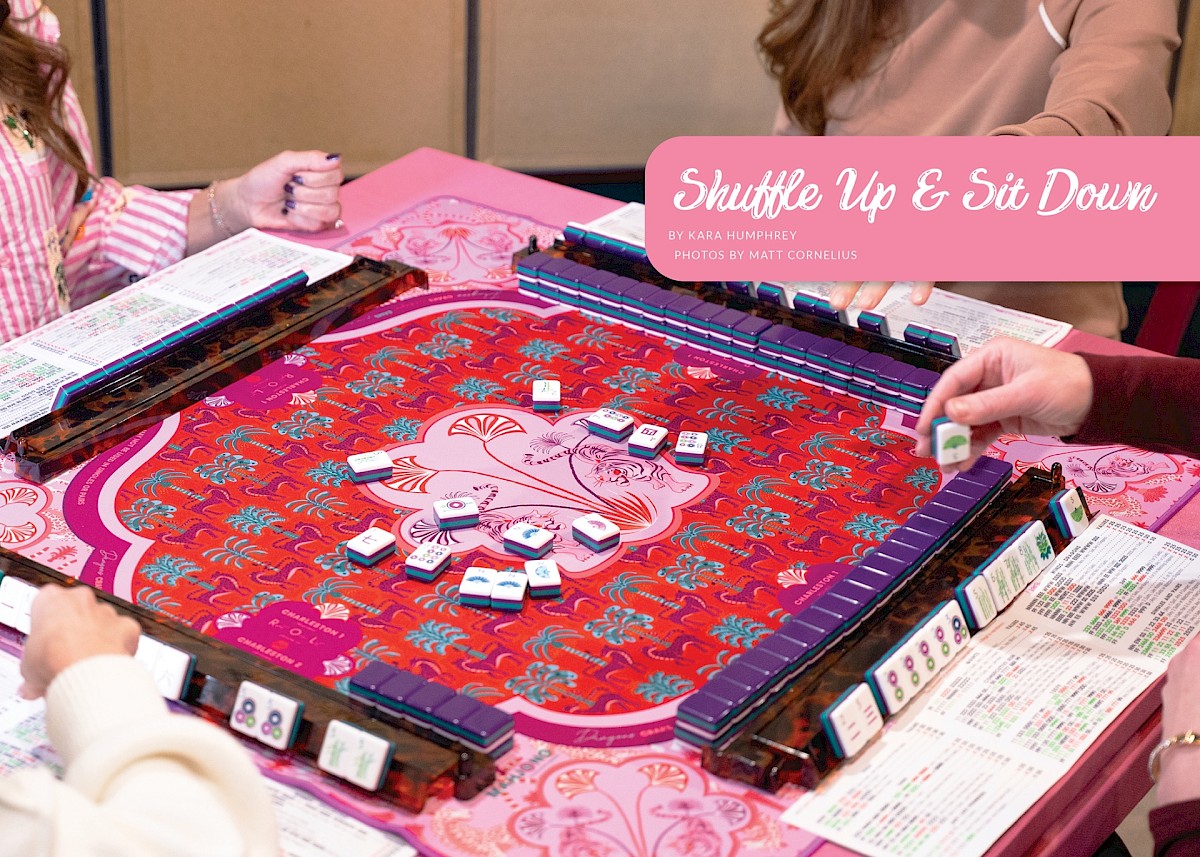
Shuffle Up & Sit Down
Over the past few years in Northeast Texas, mahjong has shifted from a niche pastime into a growing social trend, drawing players from a variety of backgrounds and ages. Once predominantly played within older Asian-American communities and at family gatherings, mahjong is rapidly growing in popularity. Players are attracted to the strategy of the game, but also to the social interaction it encourages, making it an activity for both longtime enthusiasts and curious newcomers looking for connection and cultural engagement.
This resurgence echoes broader national trends. Across the United States, mahjong’s growing popularity is partly fueled by pop culture references, social events, and a desire for offline, interactive leisure activities that build community.
Mahjong developed in mid-to-late 19th-century China, likely evolving from earlier card games and domino traditions. While myths claim Confucius or ancient Chinese royalty invented mahjong, historians trace its actual roots to communities along the Yangtze River region in the 1800s.
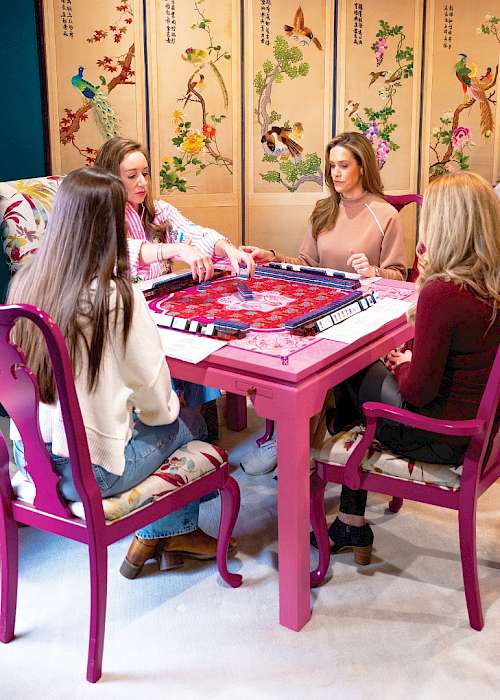
By the early 1900s, mahjong had spread throughout China’s major cities among both men and women. The name derives from a word meaning ‘sparrow,’ inspired by the clatter of tiles as they are shuffled and dealt. Mahjong was sometimes played for high-stakes gambling in courtesan houses and other times casually over tea with friends. By the late Qing dynasty, it had even reached China’s imperial court, according to popular accounts and cultural lore.
The introduction of mahjong to the United States began in the early 1920s, thanks to Chinese immigrant communities as well as marketing and commerce.
American businessman Joseph Park Babcock, who lived in Shanghai, saw its commercial potential. He created a simplified English-language rulebook in 1920 and began importing sets into the United States, where they were marketed as exotic and sophisticated novelties. Department stores sold these luxurious bone, bamboo, and lacquered tile sets, which captivated the American imagination. Within months, thousands of sets flew off the shelves, and mahjong became a national fad.
In the mid-20th century, the game found new life within immigrant and ethnic communities. Around 1937, Jewish women in New York formed the National Mah Jongg League (NMJL) to standardize American play. This version added jokers and predetermined winning hands, setting it apart from traditional Chinese rules.
But recently, something has shifted in the game’s popularity. While it never disappeared, its surge can be credited to one major thing: visibility. In pop culture, movies like Crazy Rich Asians and The Joy Luck Club introduced the game to people who had never heard of it. TikTok creators rediscovered it. Instagram accounts dedicated to sharing the beauty of mahjong sets exploded. Documentary filmmakers told the game’s history. Fashion brands released mahjong-themed collections. Celebrities like Julia Roberts, Hoda Kotb, and Jenna Bush Hager have expressed their love of the game in interviews, and other celebrities have posted photos of their mahjong nights. The game went from something only certain people knew about to something that was suddenly everywhere.
This growing trend is not just about social media hype. Something more profound may be happening.
Our world has become increasingly digital. We communicate through screens. We work from home. We pass people on the street without making eye contact. Something inside us is hungering for real presence, for time that cannot be optimized or quantified. Mahjong offers precisely that. You cannot play it while checking your phone. You cannot half-participate. The game demands your full attention and your actual presence. And players across Texarkana are throwing in their tiles and joining the game.
The interest locally can be attributed to two ladies, Heather Kiser and Helen Mobley, who are passionate about creating a community around this special game. In living rooms, around kitchen tables, and in small groups that grow week by week, they are helping bring mahjong to a whole new set of local players.
While Kiser was first introduced to the game just last year, and Mobley has been playing for almost 10 years, they both find the most important aspect of the game to be the close connections made while playing. “Personal connections are important as we age and tend to withdraw from so many activities after years of busyness,” said Kiser. “Mahjong requires focus and a lot of thought, so there’s no room at the table for all your other worries like ‘What’s for dinner?’ or ‘What bills need to be paid?’” Stepping up to the table means a temporary reprieve from the things that so easily weigh us down and a chance to make some friends along the way.
Mobley confirmed the sentiment. “As humans, we crave the attention of others, human contact, and interaction. The COVID pandemic really closed all of us off from one another and left many people feeling isolated. I sheltered in place with my husband, my daughters, and my mother. We played mahjong every day!” So, “I have to admit,” she said, “the motive for teaching mahjong to so many has been slightly selfish. In my life, I was looking for personal connections. I was craving the formation of meaningful, long-lasting relationships with others to satisfy and nurture my soul. I have found that through the game of mahjong. I have met so many incredible, smart, funny, talented, amazing people through this ancient Chinese tile game. It has been a savior for me, feeding my heart and soul through the bonds I have created.”
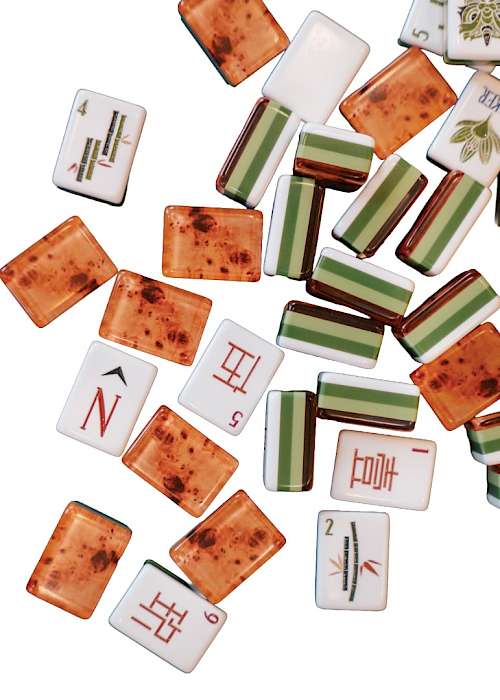
Both ladies described the NMJL card as “the biggest hurdle” to the game for new players. It serves as the official guide for American mahjong, outlining the rules of play and all the possible winning hands. The objective of the game is to build one complete winning hand listed on the card by drawing and discarding tiles until a match is achieved. According to Kiser, “It is complicated and can make you want to pull your hair out at first, but once you conquer it, you will LOVE mahjong!” In full agreement, Mobley confirms, “When students see the card for the first time, their eyes get wide, and I can see their minds scramble a bit. It is a lot of numbers, symbols, and colors, and it’s very foreign to them. I remember that feeling. I was new once, too, and have been in their position. One of the most fulfilling aspects of teaching new players is the look in their eyes and faces when the game finally clicks. It’s the aha moment! It’s a lot to take in at first, but with persistence and patience, the game begins to unfold, and that’s when the magic happens.”
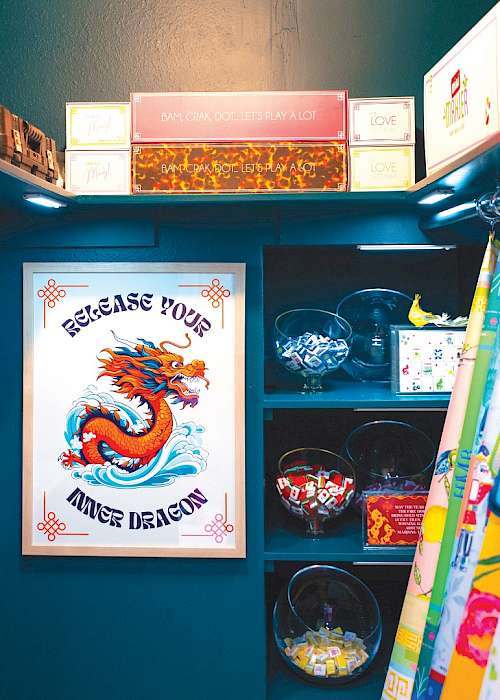
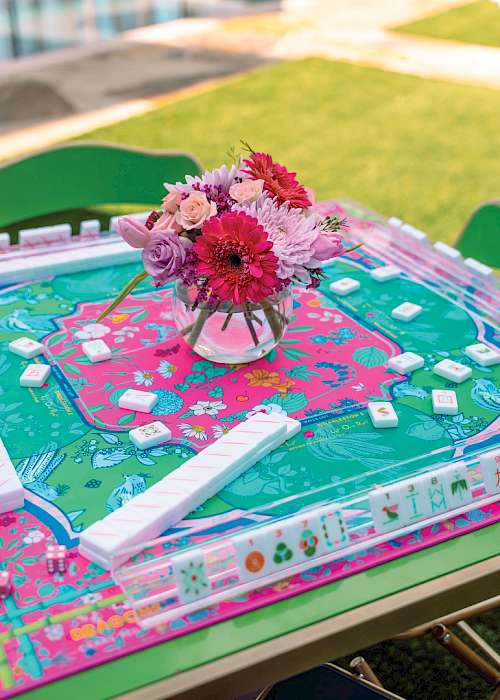
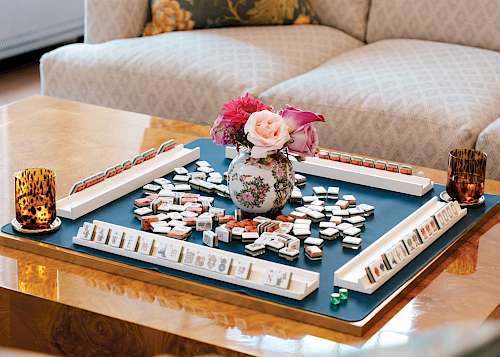
The beauty of the game also plays a significant role in its appeal. “It’s as beautiful as it is addictive,” Kiser says. There are many companies selling intricate tile sets and colorful mats, and racks that make an impressive tablescape. “Once you go down the rabbit hole, shopping to find that perfect tile set, you really must use personal restraint to avoid wanting every set and mat you see!”
But “beyond the aesthetics of the tiles and the mats, past the traditional rules of the game, mahjong is really about connection—the relationships formed, the conversations shared, and the sense of belonging it creates,” said Mobley. “If you would like to learn this special game, there is always a seat at my table.”
For those still on the fence, Kiser’s advice is simple: “I would tell anyone considering the game to just give it a try. And then, give it a try again. It takes several times of playing to grasp it, but once you do, you won’t want to play anything else.” And in Texarkana, that is exactly what is happening—one table at a time.
Helen Mobley
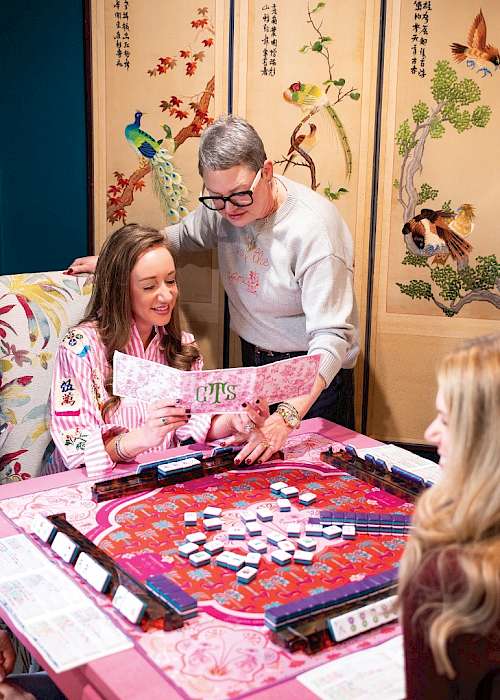
“Julie O’Shaughnessy and I are opening Texarkana’s first card and tile studio this spring. Birds Of A Tile will be a social gathering space for mahjong, bridge, and board games. We’ll host casual play, birthday parties, instructional lessons, tournaments, and private events for groups and corporations.
I’ve been teaching mahjong for five years and have worked to build a strong community around the game. Classes are open to anyone interested in learning. For more information, email [email protected] or find Texarkana Mahjong League on Facebook.”
Heather Kiser
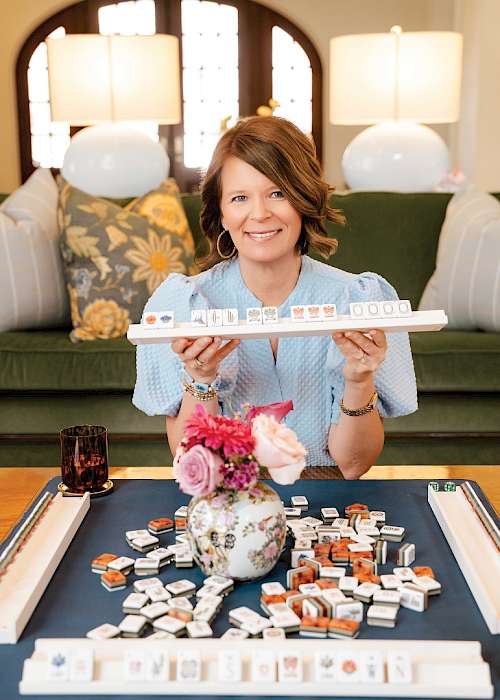
“TXK Mahj and Mingle hosts several opportunities for open play throughout the month for anyone who already knows the basics of mahjong. I also offer multiple ways to take classes for those new to the game, including one pop-up class per month and in-home instruction so you can learn with your closest friends. I am constantly posting schedules and events on all my social media outlets to keep you informed. Check Instagram at txk_mahj_and_mingle or Facebook at TXK Mahj and Mingle.”