Life on the Spectrum

The first signs were quiet. In fact, only a mother’s intuition could hear them. Long before there was a diagnosis, before therapy sessions and evaluations and unfamiliar medical terms, Jasmine Wilson simply noticed that her daughter experienced the world differently.
While other babies reached for cuddles or rocked peacefully to sleep, Kylee pulled away from touch. When her tiny hands should have been grasping Cheerios from a tray, hers struggled to coordinate the movement. Balance seemed uncertain, and sounds and textures overwhelmed her. At the time, Jasmine and her husband, Lee, did not yet know they were at the beginning of a journey that would stretch and teach them patience, deepen their compassion, and ultimately reshape the way they saw the world.
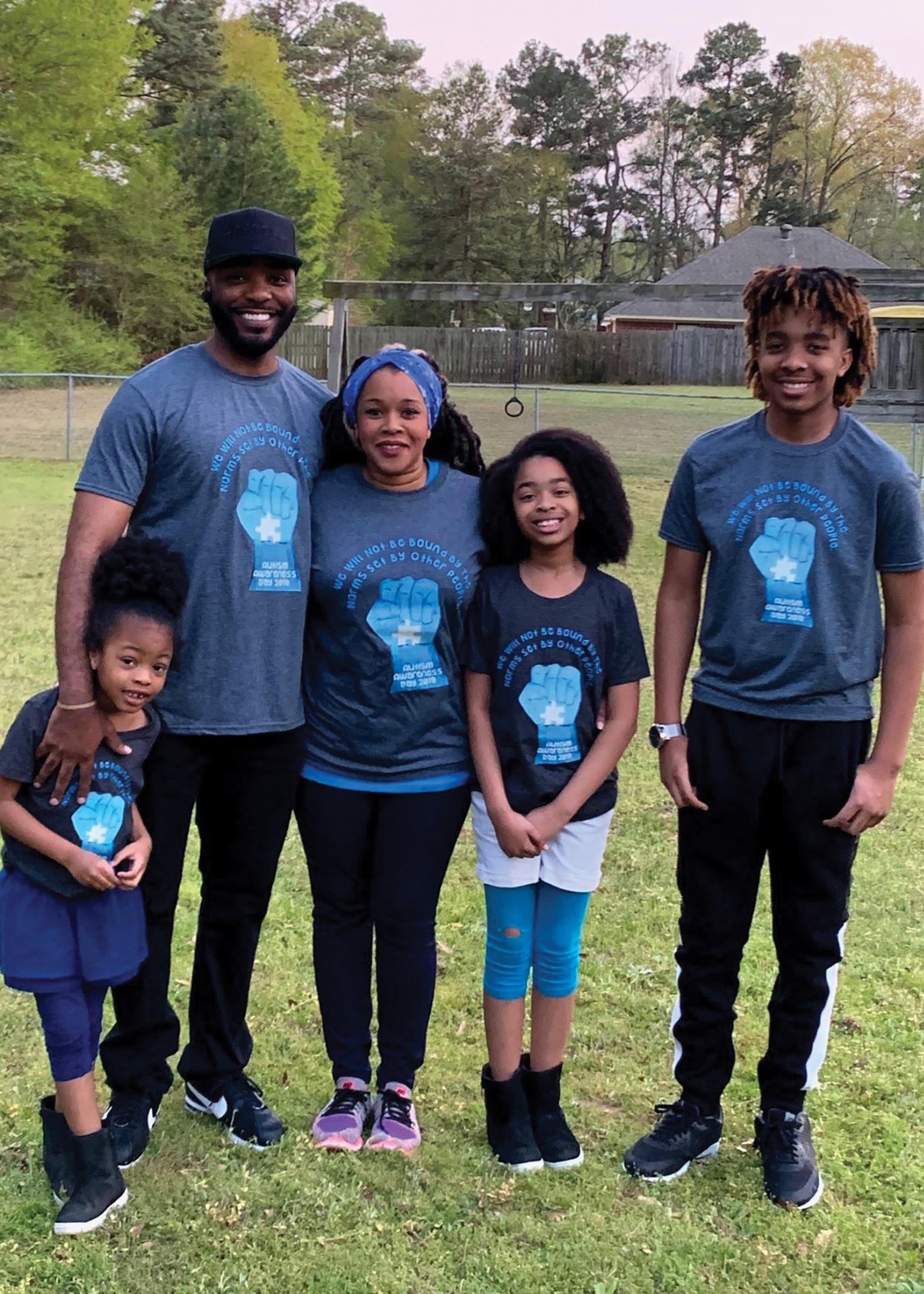
The Wilsons are a tight-knit family of five. Jasmine and Lee, high school sweethearts who have grown up side by side since their teenage years, have built a life rooted in commitment. Kylee, who is their youngest, has two older siblings, Sean and Alayna. They each bring their own personalities and energy into the home. “Watching them grow into who they are becoming,” Jasmine shares, “has been one of our greatest joys.”
By the time Kylee was around six months old, Jasmine and Lee noticed patterns that felt different from what they had experienced with their older children. “She would slowly tip over when she tried to sit up, and she struggled to grasp small objects,” Jasmine recalls. “If she saw even the tiniest piece of lint or dirt on her clothing, she would scream until it was removed.” Visitors could also be overwhelming. The presence of people outside their immediate household could trigger intense meltdowns. Certain textures bothered her deeply, and she strongly disliked being messy. “It was clear something was different,” Jasmine says. “Even if we couldn’t yet name it.”
When Kylee went for her 12-month checkup, Jasmine and Lee shared their concerns with their pediatrician, Krista Niemeyer, NP. For many parents, raising children with developmental concerns can feel intimidating. Some fear their worries might be dismissed as overthinking or unnecessary anxiety. That wasn’t the case.
“She didn’t dismiss our concerns,” Jasmine says. “Instead, she asked thoughtful questions and provided detailed questionnaires.” Most children do not receive an autism diagnosis until around age three. Although Kylee was still too young for a formal diagnosis, the pediatrician recognized clear developmental delays and immediately recommended early intervention services. Soon, referrals were made for speech, occupational, and physical therapy. That moment marked the true beginning of the Wilson family’s journey through the world of autism support and therapy. “The journey has been hard, long, emotional, educational, exhausting, and incredibly rewarding,” Jasmine shares.
Being on the autism spectrum presents differently in every child, but early indicators can often appear during infancy or toddlerhood. Some children may struggle with communication, eye contact, or social interaction. Others experience sensory sensitivities to sound, touch, textures, or light. Developmental delays in speech, motor skills, and coordination can also show up. “Looking back, the clues were there,” Jasmine says. “They just don’t look the same for every child.”
For the Wilsons, those early therapies began when Kylee was barely a year old. Speech therapy and occupational therapy became part of daily life, helping her improve communication, coordination, and sensory regulation skills. Physical therapy was evaluated, but ultimately it was determined to be unnecessary at that time. Still, the questions remained.
When Kylee turned two, the family traveled to Children’s Medical Center in Dallas to meet with a neurologist for further evaluation. After months of uncertainty, Jasmine and Lee found themselves in an unexpected place emotionally. “We didn’t fear a diagnosis anymore,” Jasmine recalls. “We just wanted clarity. We wanted to understand how to help her live the fullest and best quality of life possible.” That clarity came shortly after Kylee’s third birthday when she underwent a full individual evaluation through Texarkana Independent School District (TISD). Kylee was diagnosed with autism spectrum disorder along with mixed receptive and expressive language disorder, global developmental delay, speech impairment, fine motor impairment, and sensory integration dysfunction. She was also considered a high risk for elopement, meaning a tendency to wander away from safe environments. She later also received a diagnosis of obsessive-compulsive disorder.
While the list of diagnoses might seem overwhelming, Jasmine remembers feeling something surprising at that moment. “Receiving Kylee’s diagnosis brought an unexpected sense of relief,” she says. “Now we knew what we were facing, and we could focus on helping her.” When Kylee turned three, she began attending the Preschool Program for Children with Disabilities (PPCD) through TISD. Early intervention programs like PPCD provide specialized instruction and therapies for young children with developmental delays. It was a great place for Kylee to get her start.
Kylee spent most of her elementary years at Pleasant Grove ISD before returning to Texarkana ISD in fourth grade. Additionally, she attended speech and occupational therapy sessions twice a week outside of school. Those therapists and teachers became lifelines. “We would not have survived this journey without the incredible professionals who guided us, cried with us, struggled alongside us and prayed with us,” Jasmine says.

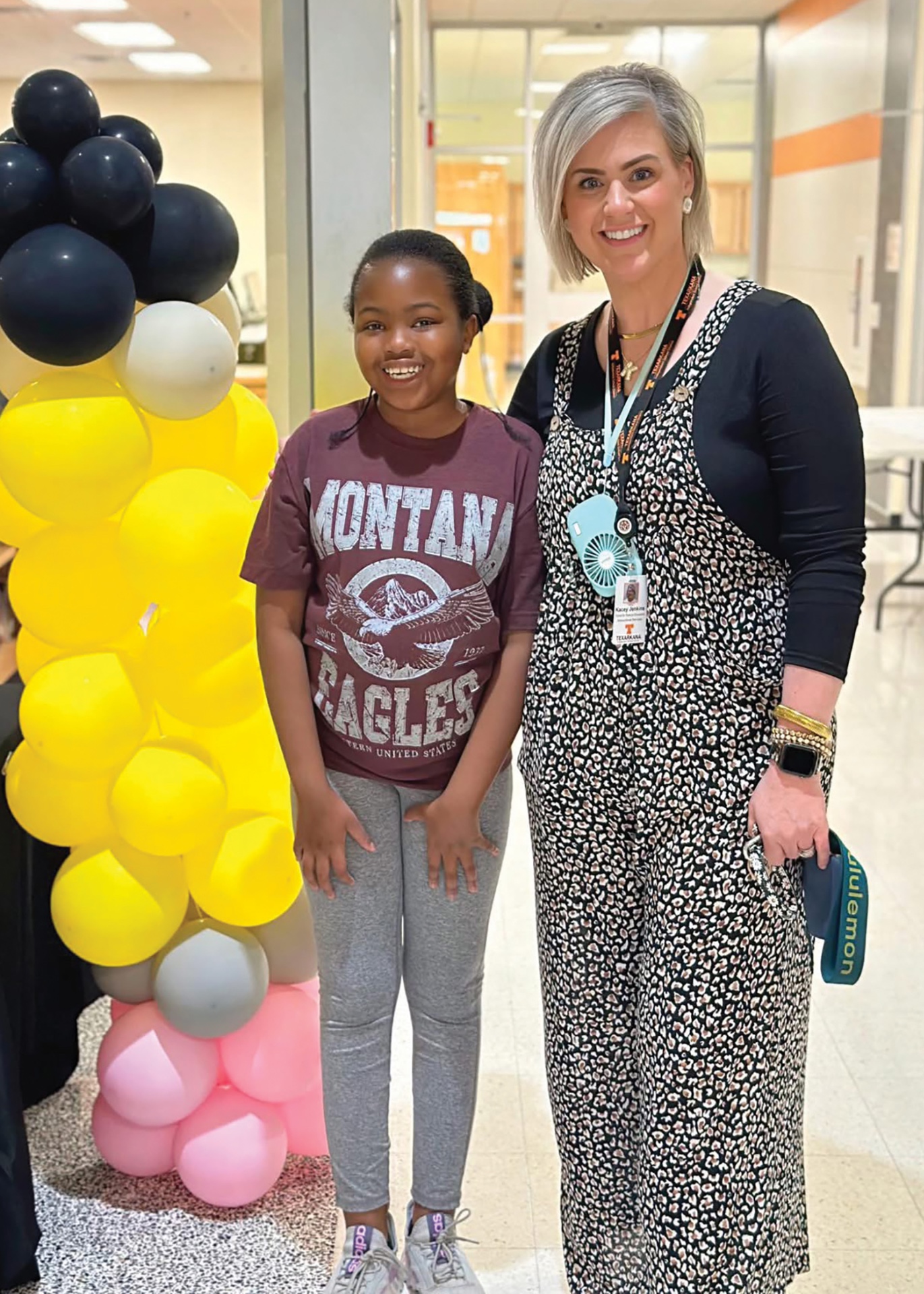
One of those educators was Kacey Jenkins, M.S., M.Ed., BCBA, LBA-TX, Coordinator for Special Education for TISD, who taught Kylee during her early school years. “I’m always honored to say I was
Kylee’s first teacher at school, since Jasmine and Lee were her first teachers at home,” Jenkins says. “From the very beginning, Kylee showed me there are many different ways to learn, communicate, and shine. Her journey is a powerful reminder of why embracing neurodiversity matters so much. She has grown in ways that are inspiring, not because she became someone different, but because she was supported and loved as the person she is.”
For several years, Jasmine’s greatest fear centered on communication. “When you have a nonverbal child, one of the biggest fears is that if something bad happens, they won’t be able to tell you,” Jasmine explains. “That thought is terrifying as a parent.” But progress came, albeit slowly at first. Kylee began gaining language around age four, and by six years old she was forming sentences. Then came a moment Jasmine says she will never forget. Although Kylee often appeared distracted during learning activities, Jasmine continued working with flashcards and word apps daily. One afternoon while Jasmine was decorating a cake in the kitchen, one of her favorite hobbies, she began cutting fondant letters. As she picked up each letter, Kylee attempted to mimic its sound. “I was completely shocked,” Jasmine remembers. “Here I was working with her every day, believing she might not be retaining much of what I was teaching, and suddenly she was showing me she knew her alphabet. Someone who didn’t know Kylee might not have understood what she was trying to say, but with each letter she tried her hardest to verbalize the sound.”
Soon, Jasmine realized something even more remarkable. Not only did Kylee know her alphabet, but she could also read the words she had been practicing through an educational app called Endless Reader. “She had been absorbing everything all along,” Jasmine said. Moments like that reshaped the way Jasmine viewed learning and communication. “Never assume a child isn’t capable simply because they communicate differently,” she stressed. “Sometimes their brilliance is just waiting for the right opportunity to be understood.”
When Kylee was younger, frustration often came in the form of meltdowns. Overwhelming sensory input or an inability to communicate could lead to head banging, screaming, or collapsing on the floor. The solution was something simple and comforting. “We would hold her in a tight squeeze, rock her gently, and sing ‘Twinkle, Twinkle, Little Star,’” she said. “The routine helped her feel safe and regulated again.” As Kylee’s language grew, many of those meltdowns faded. Today, if she becomes overwhelmed, she simply steps away from the situation to avoid frustration. Her enthusiasm, however, remains unmistakable. “If something captures her interest,” Jasmine jokes, “you can expect to hear about it at least 25 times in a single day. That enthusiasm is just one of the many ways she shows the world exactly how big her heart really is!”
One of the most common misconceptions about autism is that individuals on the spectrum lack empathy. Jasmine says nothing could be further from the truth for Kylee. “If someone gets even a minor scratch, Kylee becomes deeply concerned,” she says. “She will cry herself and do everything she can to help.”
Still, social challenges remain. As Kylee has grown older and become more aware of her differences, and as other children have pointed them out, specifically her speech delay, she sometimes withdraws socially. At school, she often does not speak unless necessary. There have been heartbreaking moments when she has asked her mother questions no parent wants to hear. “Is there something wrong with my voice?” or “Is there something wrong with the way I talk?” Another time, she came home from school and said, “I don’t trust people anymore. People can’t be trusted.”
“Those moments,” Jasmine said, “remind me just how important kindness, understanding, and inclusion truly are. My greatest hope is that the world Kylee grows up in becomes a place where children like her are not asked to shrink themselves to make others comfortable, but are celebrated for exactly who they are. Words carry weight. Children can be painfully cruel without realizing the impact.”
Over the past 13 years, Jasmine says Kylee has changed her in ways she never expected. “She has taught me to see the value in people’s uniqueness,” she says. “The things that make us different are not something to overlook. They are something to celebrate.” She has also taught Jasmine patience. “Patience is essential when raising a child on the spectrum, and it is something I had to learn intentionally,” she admits.
Perhaps the most surprising part of Kylee’s story is just how far she has come. Today, she is preparing to take algebra in the eighth grade and is enrolled in honors math. “If someone told me years ago that Kylee would reach this point, I probably would have thought they were being hopeful but unrealistic,” she said.
Wanting to educate others and help families feel less alone, Jasmine created a Facebook page called Keeping Up with Kylee. Over time, it has become a place where she can share their story and point other families towards the resources they may need. Another page, Kylee’s Konversations, highlights the humorous and honest things Kylee says. “I quickly realized how little information many people still have about autism,” Jasmine said. “Parents were messaging me about where to start.”
Each year, the family also designs and sells autism awareness T-shirts, and their purchase supports special education classrooms. It is a way for the Wilsons to give back for all the ways those classrooms have helped Kylee. Proceeds have also gone to support autism-related needs in the community, from providing communication devices like iPads to purchasing weighted blankets for sensory support.
Looking back, Jasmine knows that the early days of diagnosis can feel overwhelming and uncertain. And for parents beginning that journey, she offers encouragement. “I know how heavy your heart feels right now. I know the weight that sits on your shoulders in those early days of uncertainty. Every child’s journey is different, and no two outcomes will look exactly the same, but I want you to have something to hold on to. Early intervention can make an incredible difference, and it played a huge role in Kylee’s progress. Advocate for your child. Do not be afraid to push for support, ask questions, and seek every opportunity that may help them grow. Surround your child with people who believe in them. Most importantly, never let someone else’s limitations become the limit you place on your child.”
Today, Kylee continues to write her story, one milestone and challenge at a time. And in doing so, she is teaching everyone around her something powerful. Sometimes the most extraordinary voices are simply waiting for the world to learn how to listen.
photos courtesy of Jasmine Wilson